What this guide covers
Learn the standard Sprunki drag-and-drop loop and how to approach alternate phases carefully. The goal is to help players make a useful choice or solve a real gameplay problem without requiring music-production experience.
A practical approach
- Build the normal mix first.
- Learn each loop before seeking a transformation.
- Keep volume moderate for abrupt sounds.
- Use one change at a time.
- Reset when the stage becomes unclear.
What to check before continuing
Where to go next
Use the related games and guides below to continue with a more specific version, device, or mixing goal.
Frequently asked questions
Does this advice work in every music-mixing game?
The core listening and layering method is widely applicable, while exact buttons and special modes can differ by game.
Do I need headphones?
They are optional, but headphones make quiet effects, bass parts, and stereo details easier to separate.
Should I fill every character slot?
No. A smaller arrangement often sounds clearer because every loop has more room.
Can I use these steps on mobile?
Yes. Use touch controls and landscape orientation when the game board needs additional horizontal space.
Your first three Sprunki experiments
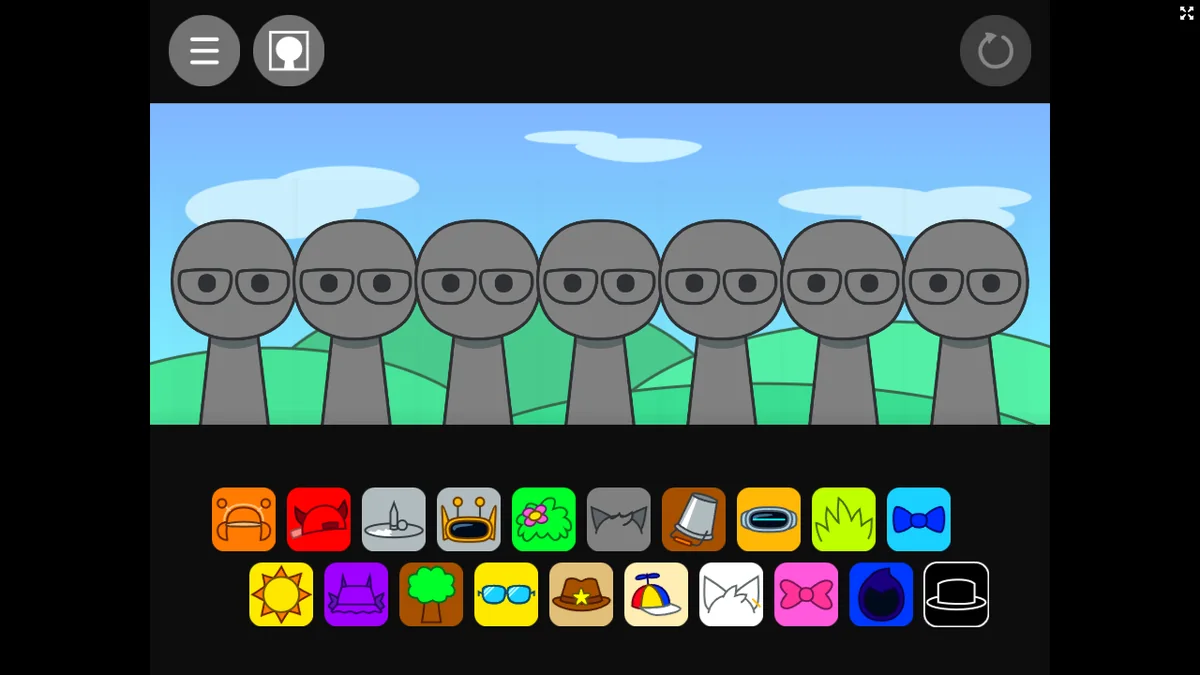
First, build a four-role mix with beat, bass, melody, and voice. Second, keep the beat and bass while replacing the melody to hear how the focal idea changes. Third, return to the original melody and replace the voice with an effect. Each experiment changes one variable and makes the result easier to understand.
Do not fill every character slot during the first session. A dense board can sound exciting but hides which performer caused overlap. Listen for two loops before changing anything and use normal mode until the roles are familiar. Enter an alternate or horror phase deliberately and at moderate volume because visual and audio intensity can change.
The original Sprunki page is the most useful reference before exploring mods, remakes, or themed versions. A beginner is ready to compare them when they can rebuild one stable four-role recipe and name the meaningful difference introduced by a new version. More characters or darker artwork alone do not prove a better mixing experience.
Keep the successful reference mix simple enough to rebuild from memory; that makes later version comparisons consistent and prevents visual novelty from replacing a musical baseline.