What this guide covers
Create a complete arrangement using only four clearly defined musical roles. The goal is to help players make a useful choice or solve a real gameplay problem without requiring music-production experience.
A practical approach
- Start with a clear musical goal.
- Use a small character group.
- Listen through a complete loop.
- Change only one performer.
- Keep the version that sounds clearer.
What to check before continuing
Where to go next
Use the related games and guides below to continue with a more specific version, device, or mixing goal.
Frequently asked questions
Does this advice work in every music-mixing game?
The core listening and layering method is widely applicable, while exact buttons and special modes can differ by game.
Do I need headphones?
They are optional, but headphones make quiet effects, bass parts, and stereo details easier to separate.
Should I fill every character slot?
No. A smaller arrangement often sounds clearer because every loop has more room.
Can I use these steps on mobile?
Yes. Use touch controls and landscape orientation when the game board needs additional horizontal space.
Rules for the four-character challenge
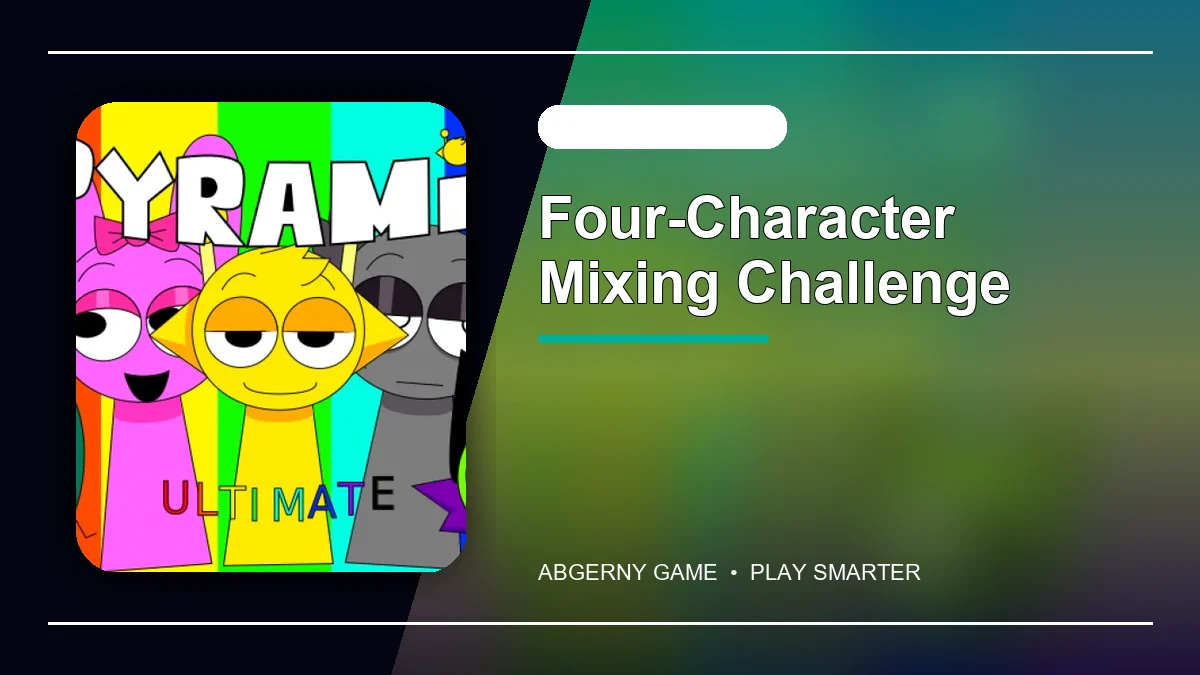
Use exactly four active performers for three complete loops. Assign them distinct jobs before selection: rhythmic anchor, low support, lead phrase, and contrast. Contrast may be a voice, effect, or second melody, but it must occupy a different rhythmic or tonal space from the lead. Once playback begins, replace only one character per loop so you can hear the consequence.
The constraint exposes duplicate roles. If removing any one performer barely changes the arrangement, two parts are probably doing similar work. Replace one with a layer that contributes a missing function rather than adding a fifth slot. For a harder version, keep the same beat and create three different moods by changing only the other roles. The challenge is complete when the mix feels intentional without relying on a full board and each part remains identifiable. It is not a contest to make the loudest arrangement; a sparse result with a clear idea is stronger than four dense loops fighting for attention.
Final review note
Repeat the challenge once with a different lead while keeping the beat fixed. The second result shows whether the original success came from a flexible rhythm or from one unusually compatible pairing. A strong four-character structure should support variation without requiring the same melody every time.